

Never Ending Maintenance Fees
Timeshare Exits
DONT PAY 2027!
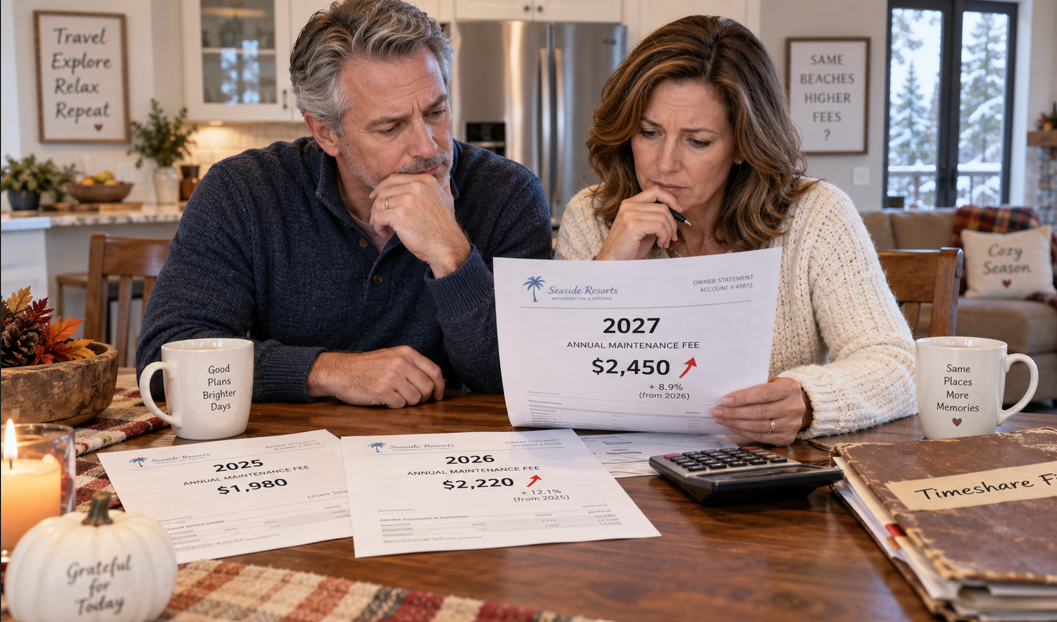

You open your annual timeshare maintenance-fee bill and think:
“How did it get this expensive?!?”
Maybe your fee has climbed gradually over the years. Maybe you barely noticed the increases at first. Or maybe the most recent bill finally crossed the line from irritating to difficult to justify. Either way, there is an uncomfortable reality every timeshare owner should understand:
That matters especially if you already know you want out.
Waiting another year doesn't necessarily mean postponing the same expense.
It may mean committing yourself to a more expensive version of the same problem.
Maintenance fees exist for legitimate reasons. Timeshare resorts have operating expenses just like hotels, condominiums, and other properties. They pay for staffing, landscaping, housekeeping, utilities, repairs, insurance, property upkeep, reserves, amenities, and other ongoing costs.
And those expenses can increase.
According to the American Resort Development Association's 2026 State of the Vacation Timeshare Industry report, the average annual maintenance fee reached approximately $1,550 per interval in 2025, compared with $1,480 in 2024. Recent industry data also shows that increases can vary substantially from one year to another.
ARDA has also pointed to several pressures facing timeshare communities in 2026, including rising supplier costs, aging properties, labor uncertainty, and less predictable operating expenses. That doesn't mean every resort will raise fees by the same percentage. But it does illustrate an important point:
Owners should not assume today's maintenance fee will remain today's maintenance fee.
Also according to ARDA’s State of the Vacation Timeshare Industry reports, the average billed maintenance fee rose from $1,260 in 2023 to $1,480 in 2024 — an increase of roughly 17.5% in just one year. The average then climbed again to approximately $1,550 in 2025.
 That means the industry average increased from about $1,170 in 2022 to $1,550 in 2025 — more than 32% in only three years.
Not every owner will experience increases at that rate, and maintenance fees vary considerably by resort. But the broader trend is difficult to ignore: the cost of maintaining a timeshare ownership has continued to move upward.
For an owner who already wants out, that matters. Waiting another year does not necessarily mean paying the same bill again next year. It may mean paying a larger one.
Suppose your current annual maintenance fee is $2,000.
A 5% increase would raise that bill to:
$2,100
Another similar increase the following year would bring it to approximately:
$2,205
Continue that pattern, and after five years, a $2,000 annual fee would be approximately:
$2,550 per year.
And during those five years, you would have paid more than $11,000 in maintenance fees alone.
That doesn't include:
The point isn't that your maintenance fee will increase exactly 5% every year.
It probably won't.
Some years may bring smaller increases. Other years may bring larger ones.
The point is that recurring costs compound.
A relatively modest annual increase can become significant when you continue carrying an unwanted timeshare for several more years.
When the maintenance-fee bill arrives, owners naturally focus on the amount sitting in front of them.
$1,500.
$2,000.
$2,500.
The immediate question becomes: “Can we afford to pay this?”
But if you already want out of the timeshare, there is another question worth asking:
One more year often doesn't feel like a major decision. You pay this year's bill. You tell yourself you'll address the timeshare later. Another year passes. Then another maintenance-fee statement arrives—possibly higher than the last one. You pay again. And suddenly, “one more year” has become three or five. That is how an unwanted ownership can quietly consume thousands of additional dollars.
There is another misconception worth addressing. Paying your maintenance fee this year does not lock in today's price for the future. It simply satisfies the obligation for the current billing period. Next year's operating budget may be different. Insurance may cost more. Labor may cost more. Repairs may cost more. An aging property may require more capital spending. Your resort's expenses—and therefore the amounts allocated to owners—can change. Industry representatives themselves have identified rising supplier expenses and aging properties as current financial challenges for resort communities.
So when you decide to remain an owner for another year, you are also accepting some uncertainty about what future ownership will cost. That's important when you're already questioning whether the timeshare still makes financial sense.
Cost alone isn't necessarily the problem.
If someone loves their timeshare, uses it every year, and believes they receive good value for the money, increasing maintenance fees may simply be part of owning something they enjoy. But many owners aren't in that situation. They tell us things like:
“We hardly use it anymore.”
“We can't find availability when we want to travel.”
“Our kids don't want it.”
“We don't travel the way we used to.”
“The fees have gotten too expensive.”
“We just want out.”
If you still value the ownership, then paying the fee may make perfect sense. But if you already know you don't want the timeshare anymore, paying increasingly expensive maintenance fees becomes harder to justify. You aren't simply paying more. You may be paying more for something you already decided you don't want.
Imagine two owners with the same $2,000 annual maintenance fee. One begins exploring an exit now. The other says:
“We'll deal with it in a few years.”

Three years later, the second owner may have spent another $6,000 or more simply maintaining the ownership—and could still be facing the same exit decision. That is why timing matters. The expense of waiting isn't always visible because it arrives one year at a time. One bill. One increase. One more year. But those years add up.
The longer you wait, the more expensive staying stuck can become.
Maintenance fees aren't necessarily the only recurring ownership expense.
Depending on the property and governing documents, owners may also encounter special assessments associated with major repairs, renovations, storm damage, insurance costs, reserve shortfalls, or other significant expenses.
Those costs are separate from the normal annual maintenance fee.
That means an owner who is already struggling with a $2,000 annual obligation may sometimes face additional expenses on top of it.
Again, that doesn't mean every owner will receive a special assessment.
It means that continuing ownership carries financial obligations that are not always entirely predictable.
If you already want out, that uncertainty deserves consideration.
This is one of the most common patterns we see.
An owner knows the timeshare isn't working anymore.
But exiting feels complicated.
So they decide:
“Let's just pay it this year and figure everything out later.”
That's understandable.
Paying the bill feels easier than confronting a complicated contract.
But easier isn't always cheaper.
Another payment keeps the ownership going.
Another year creates another opportunity for fees to increase.
And another January can arrive with the exact same problem waiting for you.
That's why our DON'T PAY 2027 campaign isn't simply about telling owners not to pay a bill.
It's about encouraging owners to stop operating on autopilot.
Before you automatically commit money to another year of ownership, understand your options.
Nobody can tell you exactly what your future maintenance fee will be. But history gives owners little reason to assume it will become cheaper. The current industry average has continued moving upward, and resorts continue facing operating-cost pressures that can ultimately affect owners. So if you already know you want out, don't evaluate your timeshare based only on today's bill.
Think about the next one.
And the one after that.
Ask yourself:
What will this ownership cost me if I keep it for another three years?
Five years?
Ten years?
Then compare that number with the cost of actually addressing the ownership. That can change the conversation considerably.

A maintenance fee is not merely another bill. It is part of the ongoing cost of remaining a timeshare owner. And every year you postpone an exit, you may be agreeing to continue paying an expense that has historically tended to move in one direction: up.
If you love your timeshare, use it, and believe it still provides good value, that may be a reasonable cost of ownership. But if you already know you want out? Waiting rarely makes the problem simpler. And it may make it more expensive.
Timeshare Recyclers helps owners evaluate their ownership, understand their options, and develop a structured strategy for permanently exiting unwanted timeshares.
During our DON'T PAY 2027 campaign, mention DON'T PAY 2027 when you enroll and receive a $1,000 credit toward our standard Straight Exit Service.
The longer you wait, the more expensive staying stuck can become.
